


Winter transforms the hiking trails of the Great Northern Catskills, opening up long-range views through bare forests and bringing a quieter feel to some of the region’s most familiar landscapes. From an easy snowshoe through Mountain Top Arboretum to scenic overlooks and more challenging mountain hikes, there are plenty of ways to explore on foot when the snow falls.
Winter hiking does require extra planning. Trail conditions can change quickly, daylight is limited, and snow and ice can make even familiar routes more challenging. Check conditions before heading out, bring the right gear, and choose a hike that matches your experience level.
Recommended Winter Hikes in the Great Northern Catskills
ARTIST’S ROCK TRAIL LOOP
Accessible year-round from North-South Lake State Campground in Haines Falls, Artist’s Rock, Sunset Rock, and Newman’s Ledge are scenic overlooks located along this loop, making for a classic Catskills winter hike. Minimal miles coupled with outstanding views make this a great intermediate excursion for anyone who enjoys being outdoors in winter. Park at the entrance to North-South Lake and take Mary’s Glen Trail and follow the 4.6-mile roundtrip loop for views of the Hudson River and mountain peaks in the Catskill Park. Plan for half a day of hiking.
MOUNTAIN TOP ARBORETUM TRAILS
This public garden in Tannersville is open year-round, from dawn until dusk, and is perfect for winter snowshoeing or hiking. Take the Woodland Walk trails for an easy-to-navigate nature walk and experience the Spruce Glen where towering coniferous trees add to the picturesque views. Four diverse environments make up the arboretum. Plan for 30-45 minutes of hiking per area, depending on the severity of the wintry conditions.
CATSKILL MOUNTAIN HOUSE OVERLOOK TRAIL
This scenic overlook was so inspiring to early settlers of the Catskills, one developer build a grand hotel and a cable railroad for guests to access the views. The grand hotel, the Catskill Mountain House, is itself a mere memory, but the views are still breathtaking. Park at the entrance to North-South Lake and take the short 1.7-mile ungroomed loop trail to the overlook. Stay clear of the edge of the cliff as winter weather causes slippery conditions. Plan for a few hours of hiking.
ACRA POINT AND BATAVIA KILL TRAIL LOOP
This hike is ideal in winter, when trees are bared of leaves, offering spectacular views you can only get in the cold months of winter. A New York DEC-maintained parking lot off of County Route 56 leads to a 5.06-mile loop to the point and back. In winter, plan for a half-day to complete this hike. Enjoy views of the Blackhead Mountain Range that are especially beautiful first thing in the morning. The often groomed trail can be hiked, snowshoed, or cross-country skied in winter.
How to Prepare for a Winter Hike
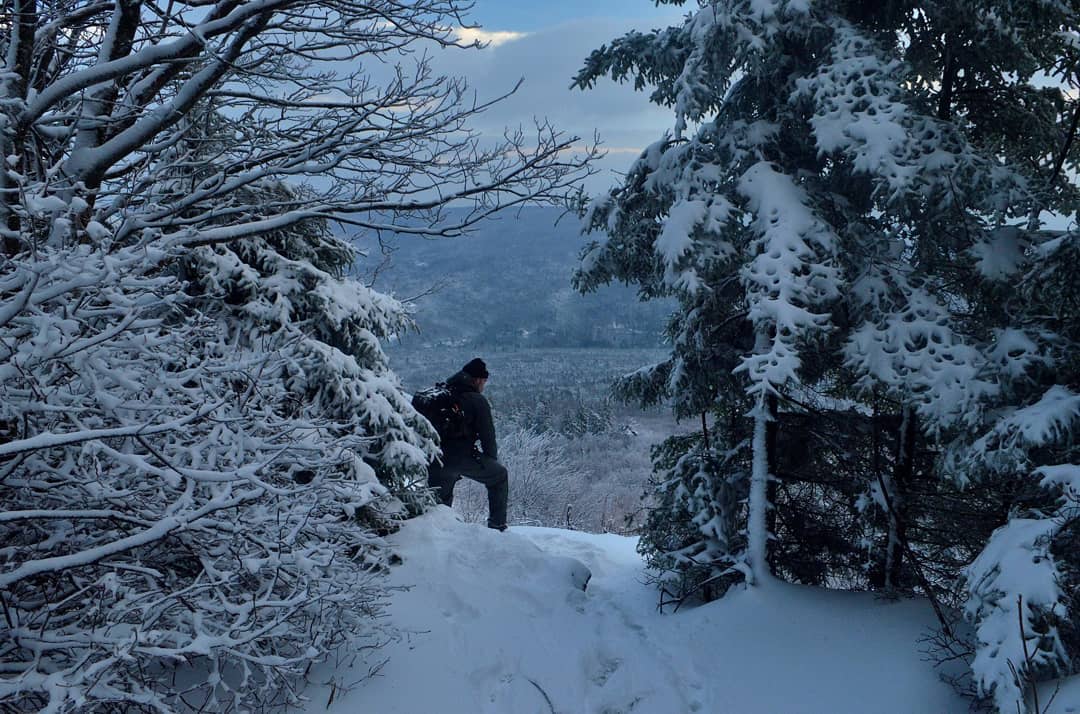
How to Prepare for a Winter Hike
Winter can make even familiar trails more challenging. Snow, ice, changing weather and shorter daylight hours can affect trail conditions and hiking times, so check the weather and current conditions before you go, choose a route that matches your experience level and let someone know your plans.
What to Pack for Winter Hiking
- Plenty of water and high-energy snacks
- Trail map and navigation tools
- Headlamp or flashlight with extra batteries
- First-aid supplies
- Extra warm, dry layers
- Emergency shelter, such as a space blanket or bivy
- Whistle and other basic emergency supplies
- Traction devices and/or snowshoes appropriate for trail conditions
What to Wear
Dress in layers so you can adjust as temperatures and activity levels change. Avoid cotton, which holds moisture, and choose moisture-wicking and insulating layers instead.
- Insulated, waterproof hiking boots
- Warm wool or synthetic socks
- Moisture-wicking base layers
- Fleece or other insulating mid-layer
- Waterproof and windproof outer layer
- Warm hat and gloves or mittens
- Gaiters when snow conditions warrant
- Microspikes, crampons or snowshoes as conditions require
Before heading out, check the weather and trail conditions and allow extra time for winter travel. Sign trail registers where provided, stay on marked trails and be prepared to turn around if conditions worsen. Always follow Leave No Trace principles.


